 Toolvia
Used car inspection checklist
You don’t need to be a mechanic to spot most problems on a used car. Work through this checklist in order, and you’ll know within half an hour whether a car is worth a professional inspection or a polite goodbye.
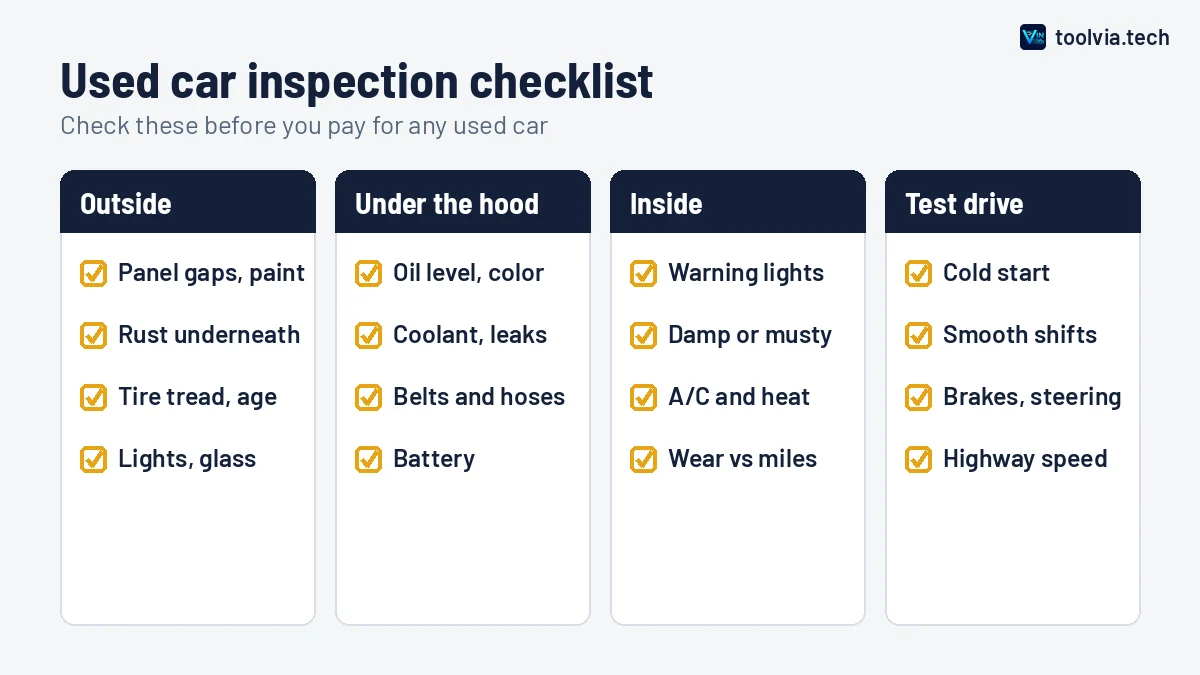
The short version: check the paperwork and VIN first, then walk around the outside, look under the hood with the engine cold, check the interior and electronics, and finish with a test drive that includes a cold start and some highway speed. If the car passes, pay an independent mechanic for a pre-purchase inspection before you hand over money.
Before you go
A lot of bad cars can be ruled out from your couch. Ask the seller for the VIN, then:
- Decode the VIN and make sure the year, trim, engine and drivetrain match the ad. Our free VIN decoder does this in seconds, and the AI used car checker compares the listing for you.
- Check for open recalls with our recall check.
- Ask for service records. Regular oil changes and documented repairs are a good sign. No records at all on a newer car is worth a question.
- Get a history report for any car you’re serious about. It shows reported accidents, title brands and mileage records.
Paperwork and VIN
- The VIN on the dashboard, the driver’s door label and the title should be identical.
- The name on the title should match the seller’s ID. If it doesn’t, ask why.
- Look for words like salvage, rebuilt, flood or lemon on the title.
- Ask whether there’s a loan on the car. If there is, find out how the lender will be paid off and the title released.
Outside
Look at the car in daylight, ideally when it’s dry. Rain and dim light hide a lot.
- Panel gaps. The gaps between doors, hood and fenders should be even. Uneven gaps often mean a past repair.
- Paint. Look along the sides at an angle. A panel that’s a slightly different shade, or overspray on rubber seals and trim, points to bodywork.
- Rust. Check the wheel arches, the bottom of the doors, the rocker panels under the doors and, if you can, the frame and suspension mounts underneath. Surface rust is common on older cars; rust that flakes or has holes is not.
- Tires. Tread should be even across the width. Wear on one edge suggests an alignment or suspension problem. The four-digit code on the sidewall shows the week and year the tire was made, so 3219 means the 32nd week of 2019. Old tires may need replacing even with good tread.
- Glass and lights. Look for chips or cracks in the windshield, and check that every light works, including brake lights and turn signals.
Under the hood
Ask the seller not to start the car before you arrive. A cold engine tells you more, and a warm hood on arrival is worth noticing.
- Oil. Pull the dipstick. The oil should be between the marks and brown to black, not milky. A milky, light-brown film on the dipstick or under the oil cap can be a sign of a head gasket problem.
- Coolant. With the engine cold, check that the reservoir is at the right level and the coolant is clean, not rusty or oily.
- Leaks. Look for wet spots and fresh drips on the engine and on the ground underneath.
- Belts and hoses. Look for cracks, fraying or soft, swollen hoses.
- Battery. Heavy corrosion on the terminals or a battery that’s several years old is a small but real cost.
- A freshly steam-cleaned engine on an older car isn’t automatically bad, but it can hide leaks. Look extra carefully.
Inside
- Warning lights. When you turn the key, the dashboard lights should come on briefly and then go out. A check-engine light that stays on needs explaining. One that never comes on at all may have been disabled.
- Smell and moisture. A musty smell, damp carpets or silt under the seats can mean water damage. Pull back a corner of the trunk carpet and look.
- Wear versus mileage. A worn steering wheel, pedals and driver’s seat on a car with very low miles doesn’t add up.
- Everything electric. Test the windows, locks, mirrors, seats, infotainment, backup camera, A/C and heat. Repairs to these add up quickly.
The test drive
Plan at least 20 minutes, with a mix of slow streets, bumps and a stretch of highway.
- Cold start. Listen for knocking, rattles or a long crank before it fires. Look behind the car for blue or thick white smoke.
- Transmission. Shifts should be smooth and prompt. Slipping, harsh clunks or a delay when you select drive or reverse are expensive warning signs.
- Brakes. The car should stop straight without pulling, grinding or a pulsing pedal.
- Steering and suspension. On a straight road, the car shouldn’t drift. Over bumps, listen for clunks.
- Highway speed. Vibration through the wheel or seat at speed can mean anything from unbalanced tires to worn parts.
- After the drive, look under the car again for new drips.
Red flags that mean walk away
- The VINs on the car and the title don’t match, or a VIN plate looks tampered with.
- The seller won’t let you take the car to a mechanic.
- Signs of flood damage, like silt, rust on seat rails or a strong musty smell.
- A title the seller can’t produce, or one that isn’t in their name with no good explanation.
- Pressure to decide on the spot or pay a deposit before you’ve seen the car.
Get a pre-purchase inspection
If the car passes your checks, the last step is an inspection by an independent mechanic you choose, not one the seller recommends. They’ll put the car on a lift, scan for stored fault codes and check things you can’t, like the condition of the brakes and suspension. It costs far less than most of the problems it can uncover, and a seller who refuses is telling you something.
Frequently asked questions
What should I check first when buying a used car?
The paperwork. Make sure the VIN on the car matches the title, the seller’s name is on the title, and the title isn’t branded salvage or flood. Then decode the VIN to confirm the car matches the ad.
How long does a used car inspection take?
Doing it yourself with this checklist takes about 30 to 45 minutes including a test drive. A professional pre-purchase inspection usually takes about an hour.
Should I always get a mechanic to inspect a used car?
For any car you’re about to pay real money for, yes. A mechanic can check things you can’t see without a lift and a scan tool.
What are the biggest red flags on a used car?
Mismatched VINs, signs of flood damage, a seller who won’t allow an independent inspection, and title problems.
Keep reading
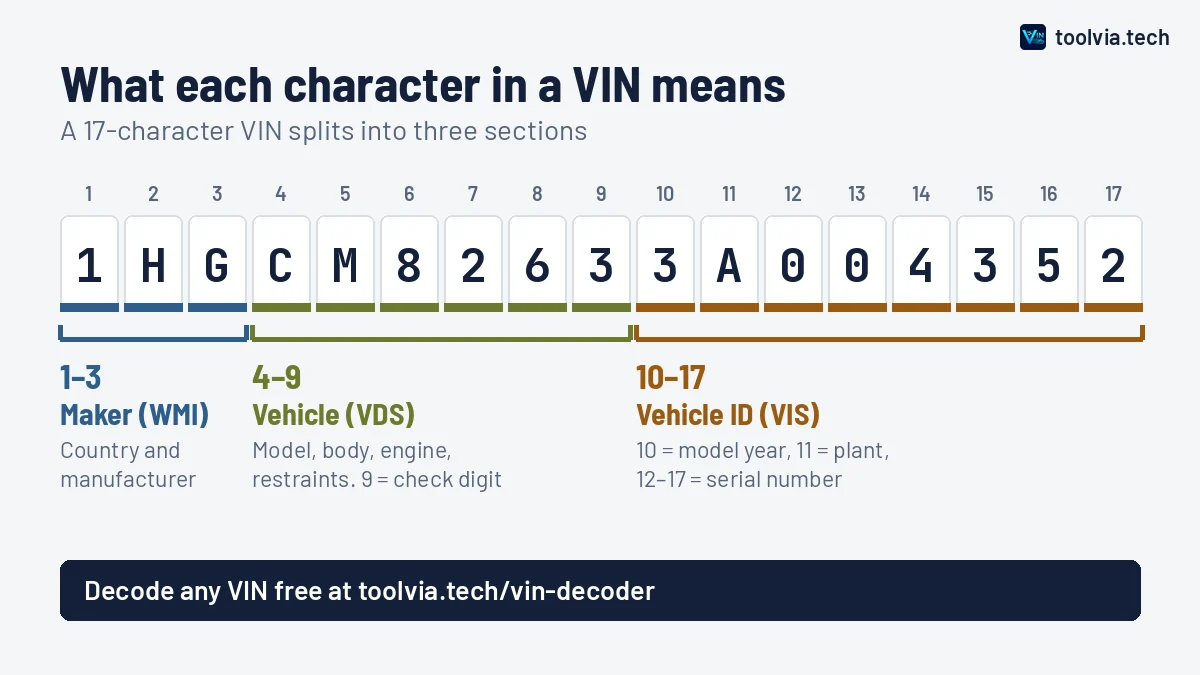
A plain-English guide to all 17 characters of a VIN: the maker code, vehicle details, check digit, model year, plant…
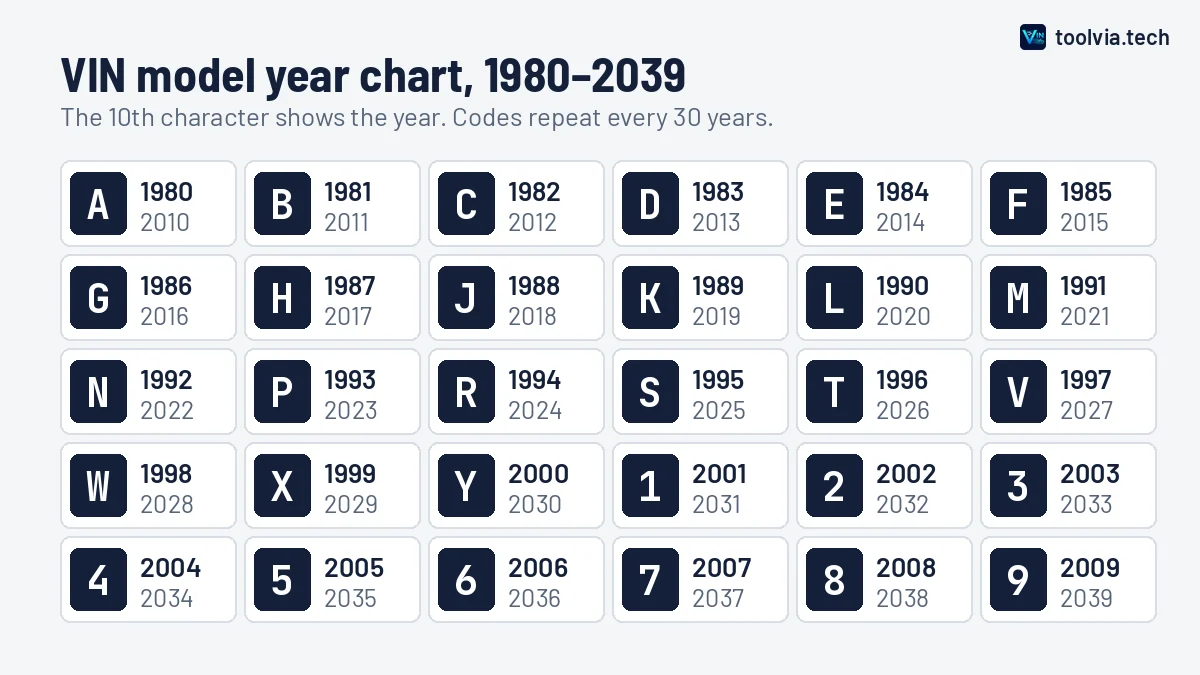
Find any vehicle’s model year from the 10th character of its VIN. A complete chart from 1980 to 2039, plus the simple…
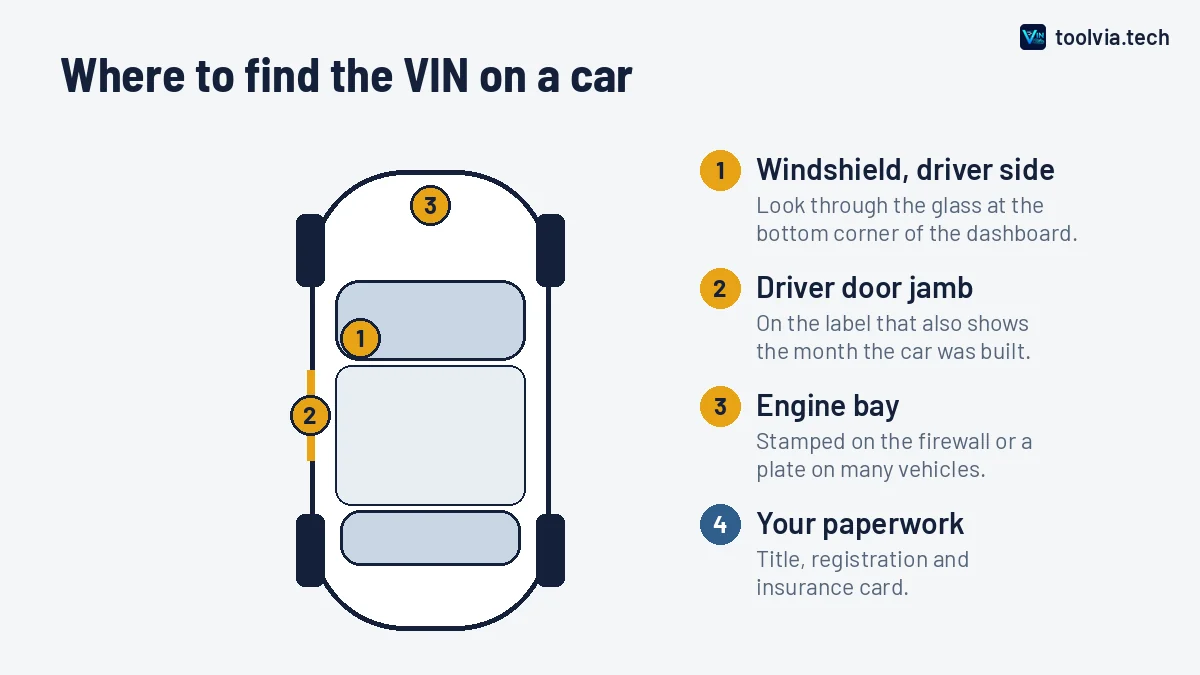
The quickest places to find a VIN on a car, truck, motorcycle, trailer or RV, plus which documents show it and what to…
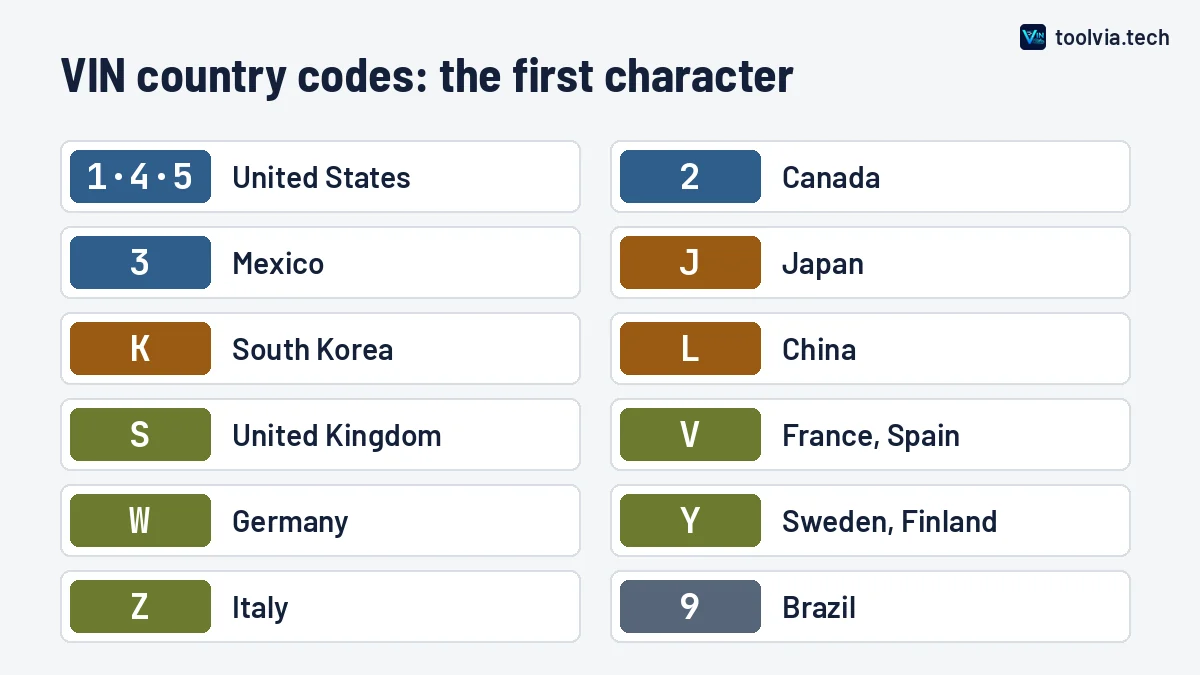
The first character of a VIN shows where a vehicle was built. See the full list of VIN country codes, how the second…
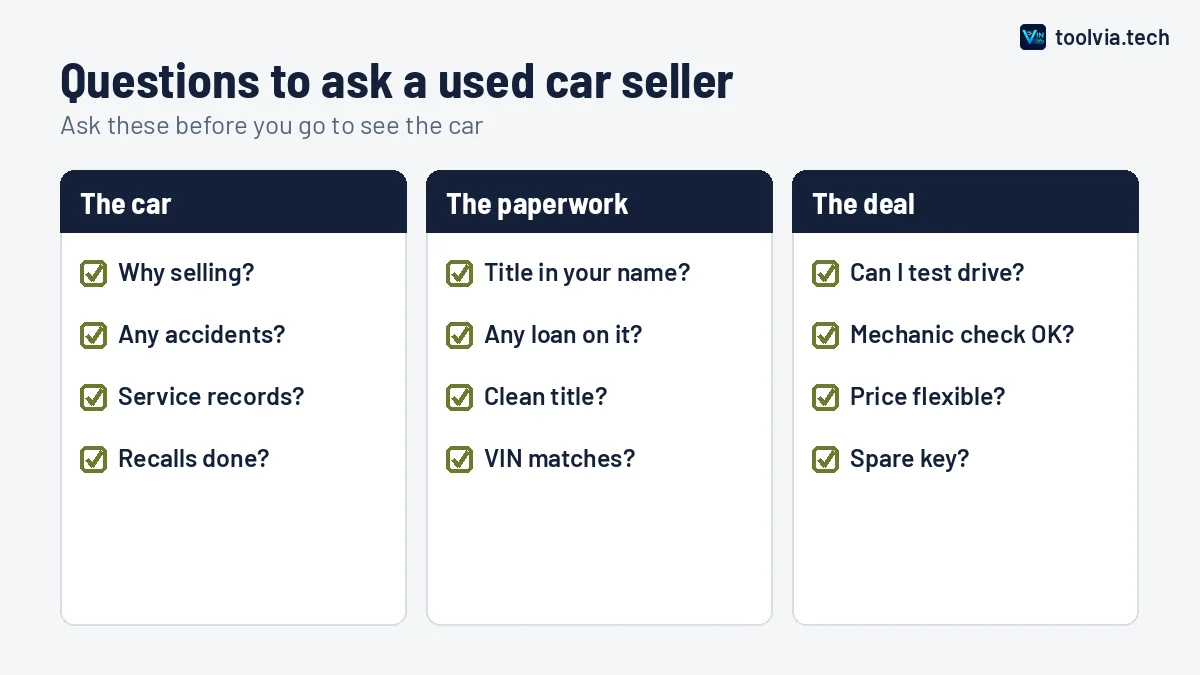
The questions to ask a private seller or dealer before you see a used car, why each one matters, and which answers…
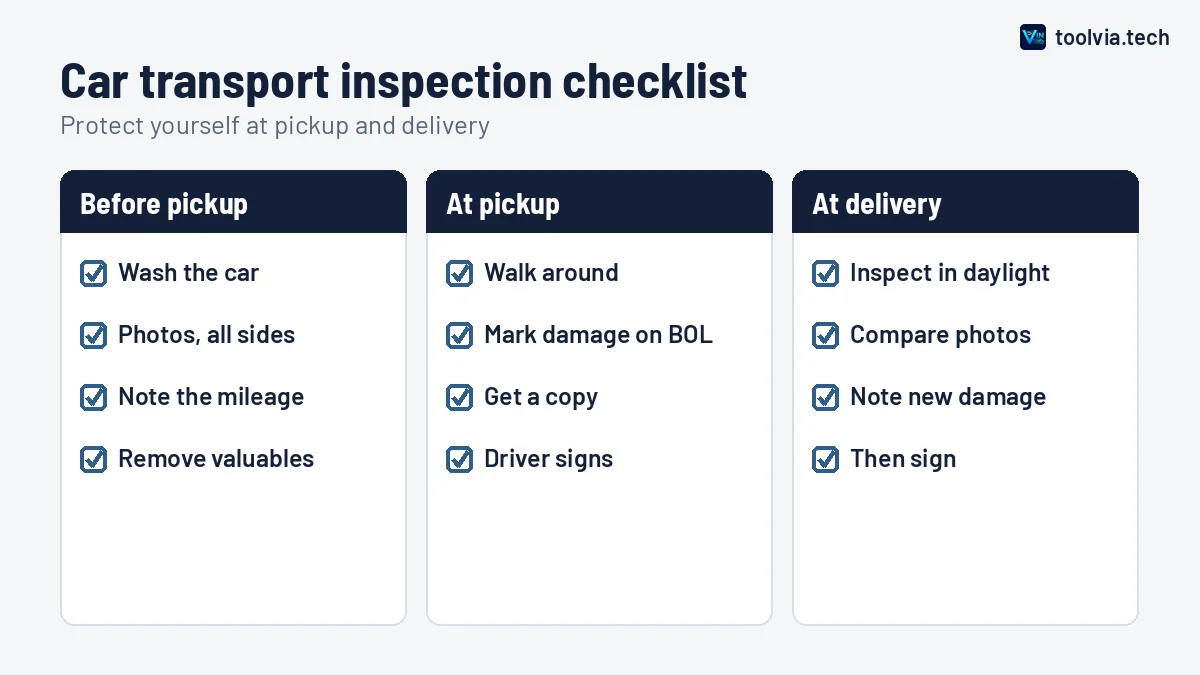
How to inspect and document your car before and after shipping it, including how to use the bill of lading so you can…