 Toolvia
Car transport inspection checklist
When you ship a car, the inspection report you sign at pickup is your main protection if something goes wrong. A careful 15 minutes at each end makes the difference between a quick damage claim and an argument.
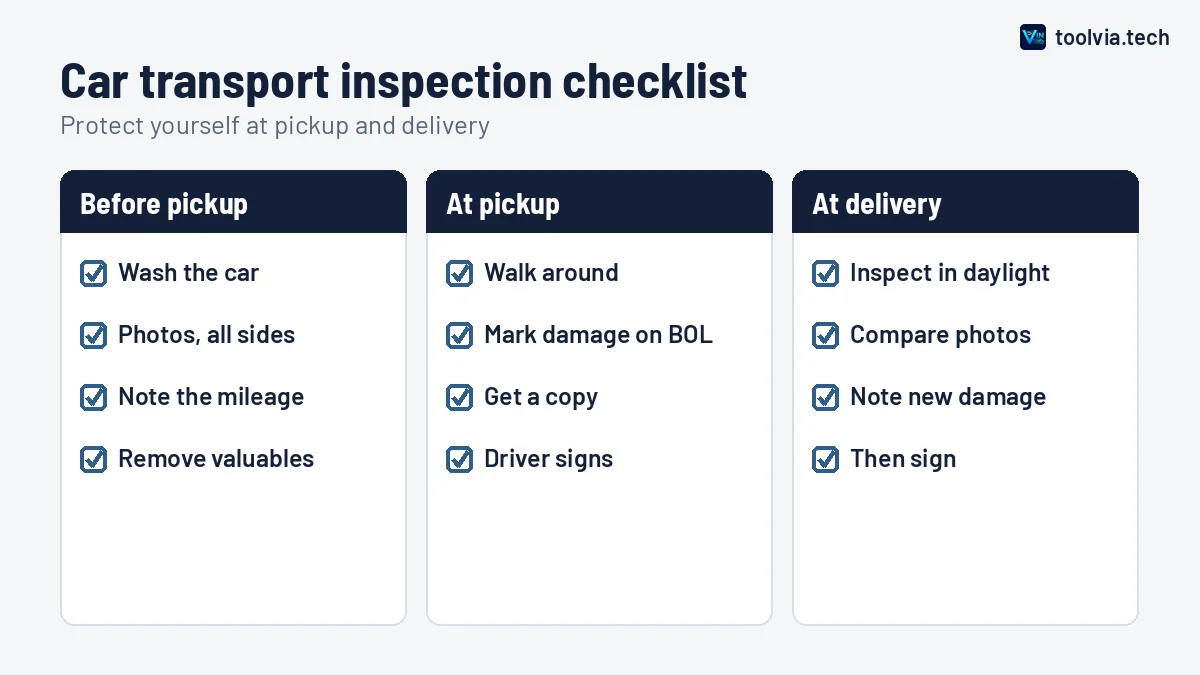
The key rule: any damage must be written on the bill of lading at delivery, before you sign it and before the driver leaves. Photos help, but the signed bill of lading is what carriers rely on.
What the bill of lading is
The bill of lading, often called the BOL, is the inspection report and receipt the driver fills in when they collect your car. It records the car’s condition, usually on a diagram where existing scratches and dents are marked. You and the driver both sign it at pickup, and again at delivery. Keep your copy safe.
Before pickup
- Wash the car. Dirt hides scratches, and you can’t document damage you can’t see.
- Take photos and video. Shoot every side, each corner, the roof, the wheels and the interior, in good light. Make sure the files keep their date and time.
- Note the mileage. Photograph the odometer.
- Remove personal items. Carriers usually aren’t insured for belongings inside the car, and some won’t take a car with items in it. Remove toll tags too, so you’re not charged for every toll on the trip.
- Keep the fuel low. Many carriers ask for about a quarter tank or less, to keep the weight down.
- Secure loose parts. Fold in mirrors, retract antennas, and remove or secure anything that could come loose, like a roof rack or spoiler.
- Turn off the alarm, or tell the driver how to disable it.
- Note any leaks or mechanical issues and tell the carrier. Some won’t load a car that leaks fluid.
At pickup
- Walk around the car with the driver while they fill in the bill of lading.
- Make sure every existing scratch, chip and dent is marked, and that nothing is marked that isn’t there.
- Check that the VIN, mileage and your contact details are correct.
- Sign only when you agree with the report, and get a copy before the car leaves.
At delivery
- Inspect before you sign. Do it in daylight if you can. If it’s dark or raining, use a flashlight and write a note on the bill of lading saying the inspection was done in poor conditions.
- Compare with your photos and the pickup report, panel by panel, including the roof and lower bumpers.
- Write down any new damage on the bill of lading and have the driver sign it. Take photos of the damage with the truck in the background.
- Check the mileage against your pickup photo, and start the car.
- Then sign. Signing a clean bill of lading usually means you accept the car as delivered, which makes later claims much harder.
If there’s damage
Contact the carrier or broker in writing as soon as possible, with your copy of the bill of lading, the photos and a repair estimate. Carriers must carry insurance, but claim deadlines can be short, so check your contract and act quickly. Don’t refuse delivery unless the car is undrivable; accept it, note the damage and file the claim.
Buying a car you’ll have shipped?
If you’re buying a car from out of state and won’t see it before it arrives, do as much checking as you can in advance. Decode the VIN, run our AI used car checker on the listing, and pay a local mechanic near the seller for a pre-purchase inspection. It’s much easier to walk away before the car is on a truck.
Frequently asked questions
What should I check before shipping my car?
Wash it, photograph every side and the odometer, remove personal items and toll tags, keep the fuel low, secure loose parts and note any existing damage.
What happens if I sign the bill of lading without noting damage?
It usually counts as accepting the car in the condition delivered, which makes a damage claim much harder. Always note damage before signing.
Should I take photos before car transport?
Yes. Clear, time-stamped photos of every side, the roof, the wheels, the interior and the odometer are your best supporting evidence.
Keep reading
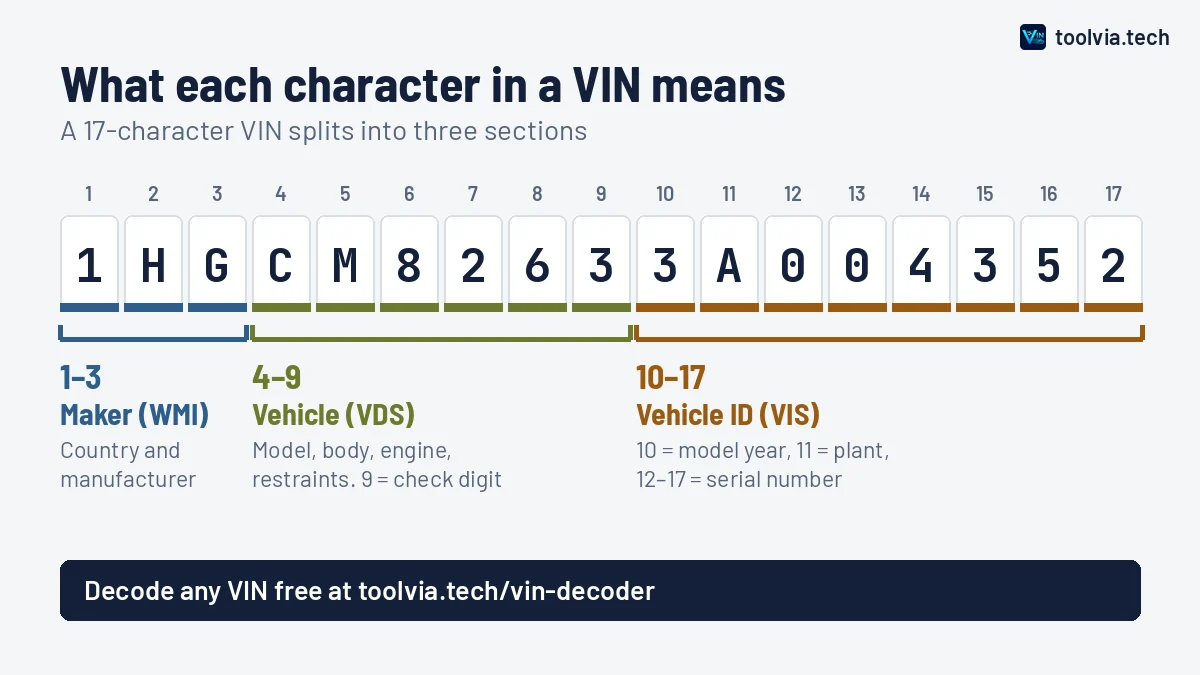
A plain-English guide to all 17 characters of a VIN: the maker code, vehicle details, check digit, model year, plant…
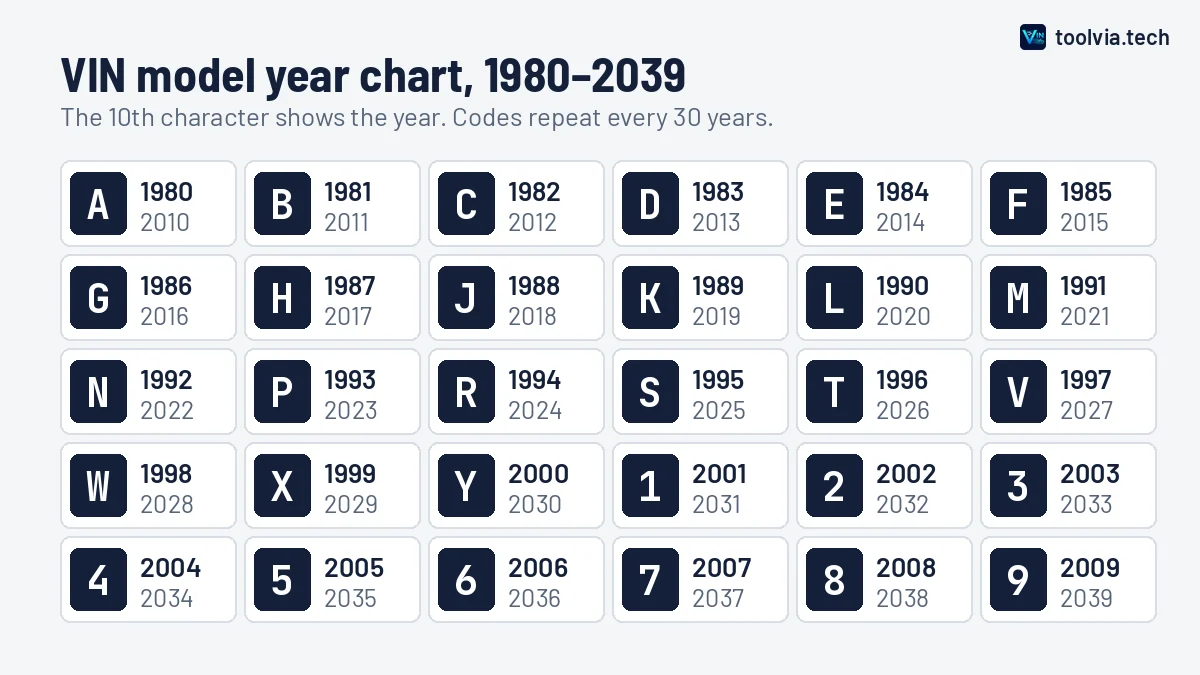
Find any vehicle’s model year from the 10th character of its VIN. A complete chart from 1980 to 2039, plus the simple…
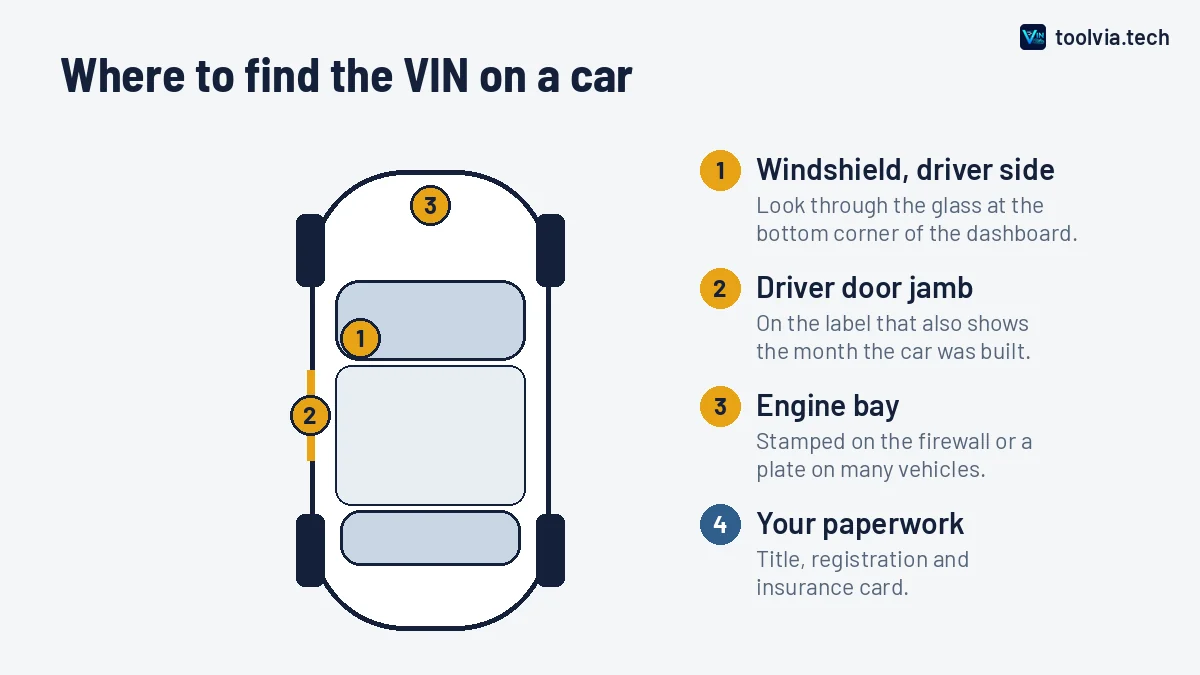
The quickest places to find a VIN on a car, truck, motorcycle, trailer or RV, plus which documents show it and what to…
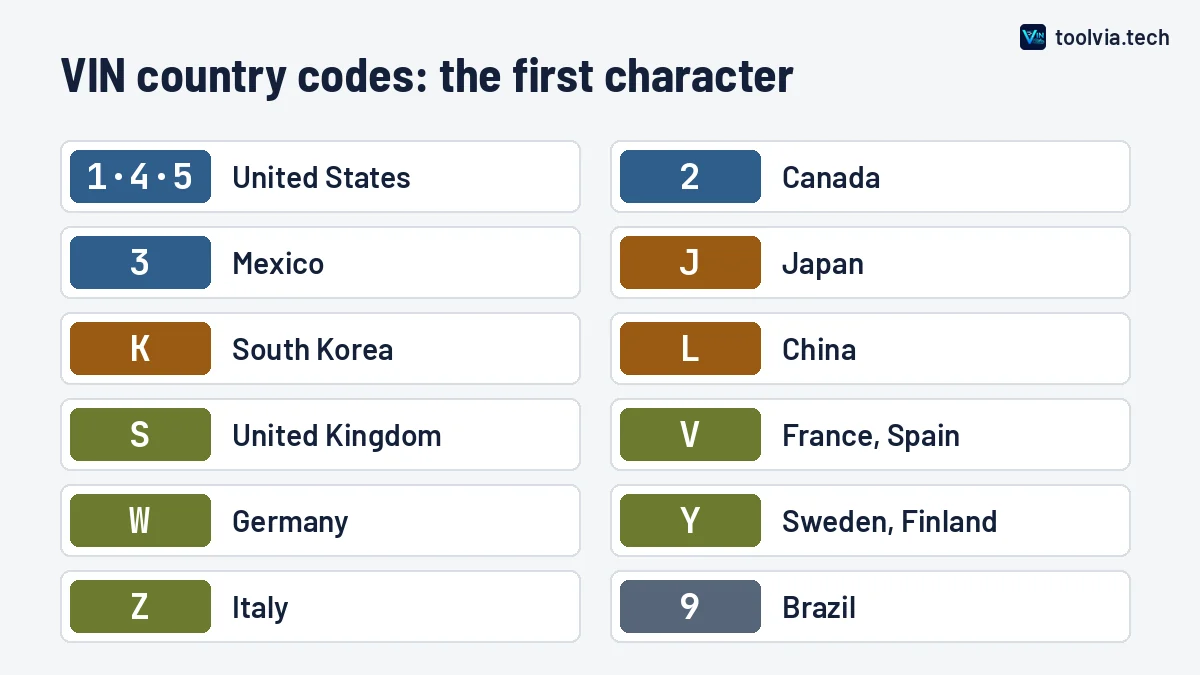
The first character of a VIN shows where a vehicle was built. See the full list of VIN country codes, how the second…
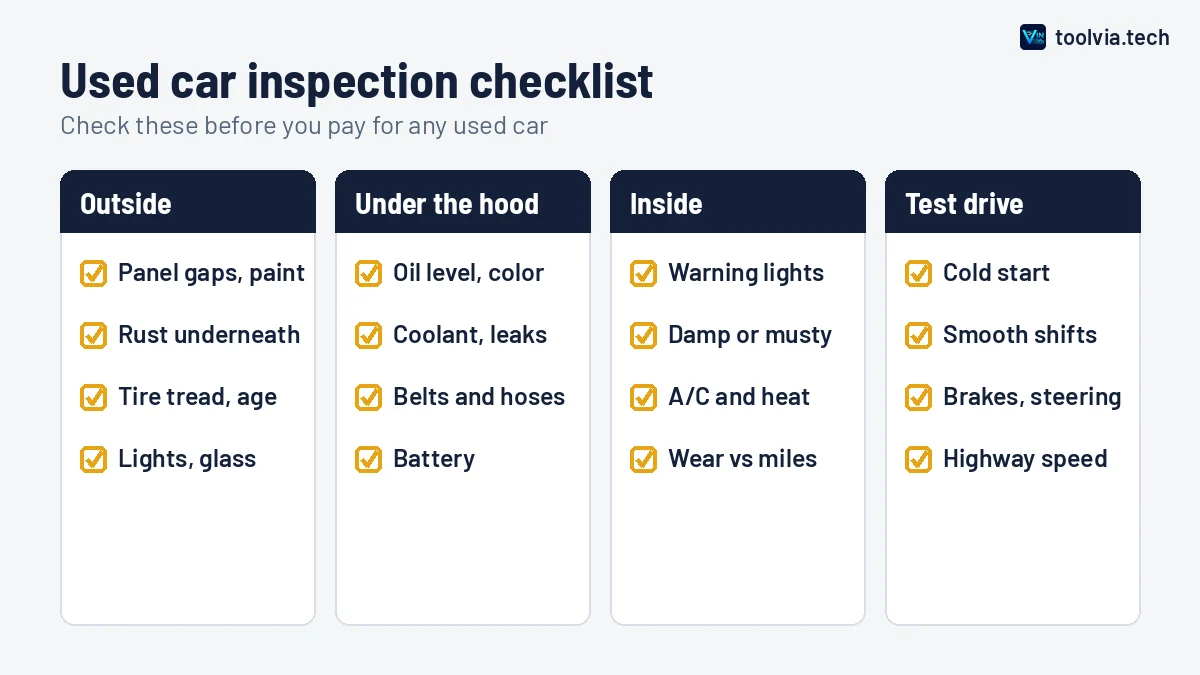
A practical used car inspection checklist covering paperwork, exterior, engine bay, interior and the test drive, plus…
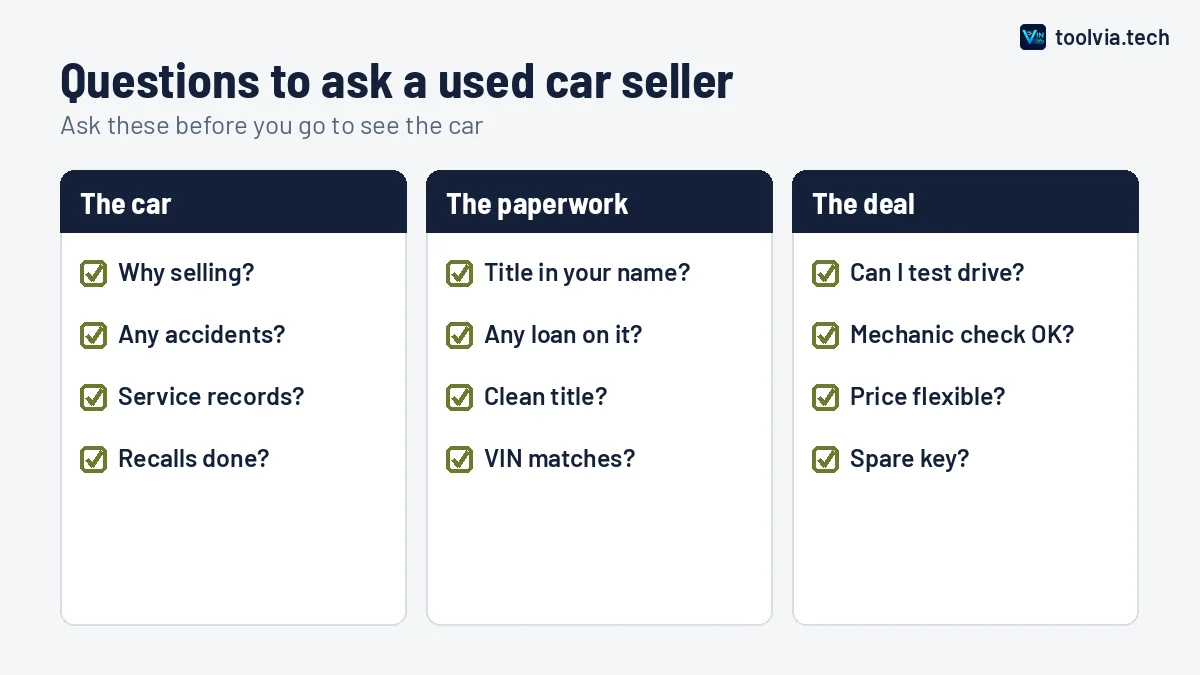
The questions to ask a private seller or dealer before you see a used car, why each one matters, and which answers…